

Certainly — Brand & UX Design
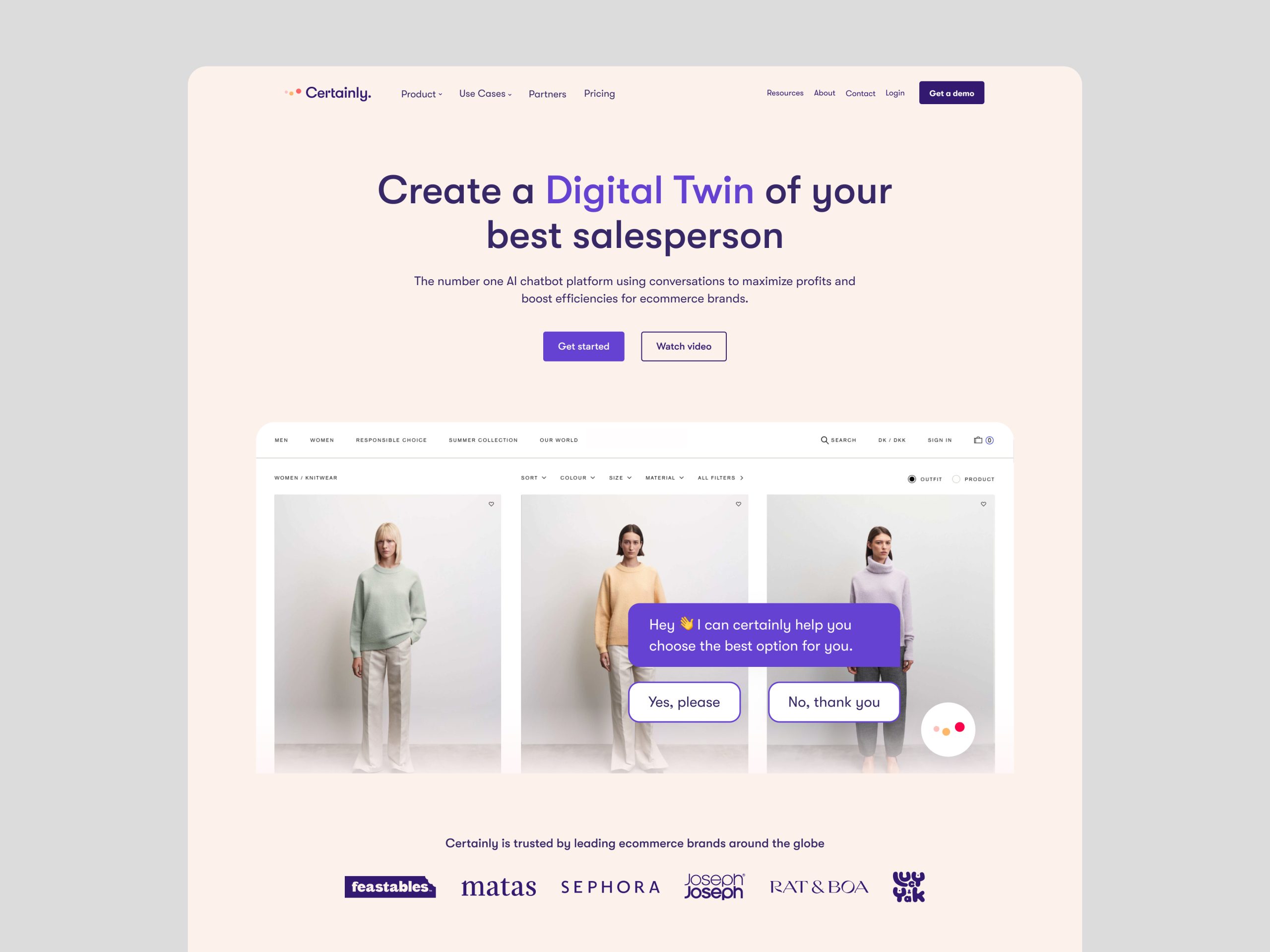
Certainly is an AI-powered conversational platform built for frontline ecommerce teams. I joined shortly after the company had completed a rebrand — and the timing mattered. The new identity hadn’t landed the way anyone expected. It looked considered on a mood board and became a liability the moment it had to do real work. Abstract shapes filled the website. The product was almost impossible to explain at a glance. The sales team was walking into conversations without anything credible to leave behind. My brief, in practice, was to figure out why a recently finished rebrand was failing across every surface — and fix it.
The Problem
The visual language wasn’t wrong so much as it was limited. The brand had a strong, high-contrast colour palette and a well-executed vector illustration style — clean line work that served well in whitepapers and explainer content. The problem was that illustration can convey a concept but it can’t show a product. Certainly needed to show a product. The admin configuring a chatbot flow. The customer getting a recommendation mid-browse. The actual interfaces, the actual people. None of that was visible anywhere. The palette compounded things — too narrow to do real work across channels, not enough neutral tones to support product UI, not enough variation to create hierarchy without breaking the brand feel. Art direction had gone conceptual at exactly the moment the company needed to make a complex product legible to commercial buyers.

Rebuilding the Brand System
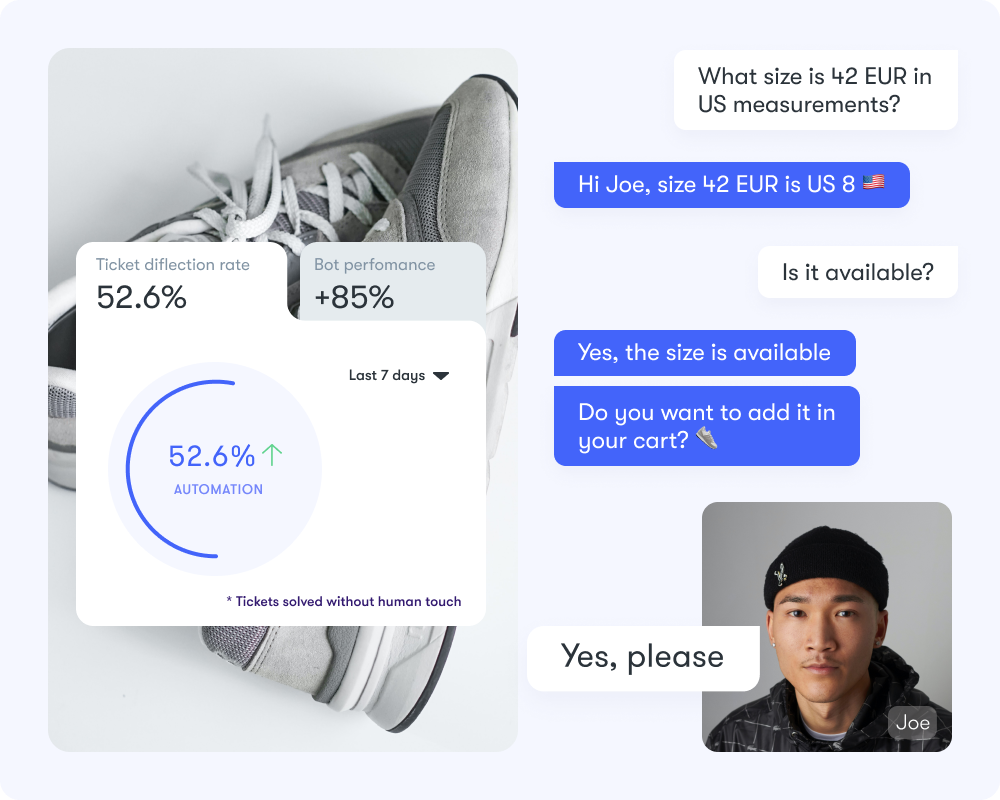
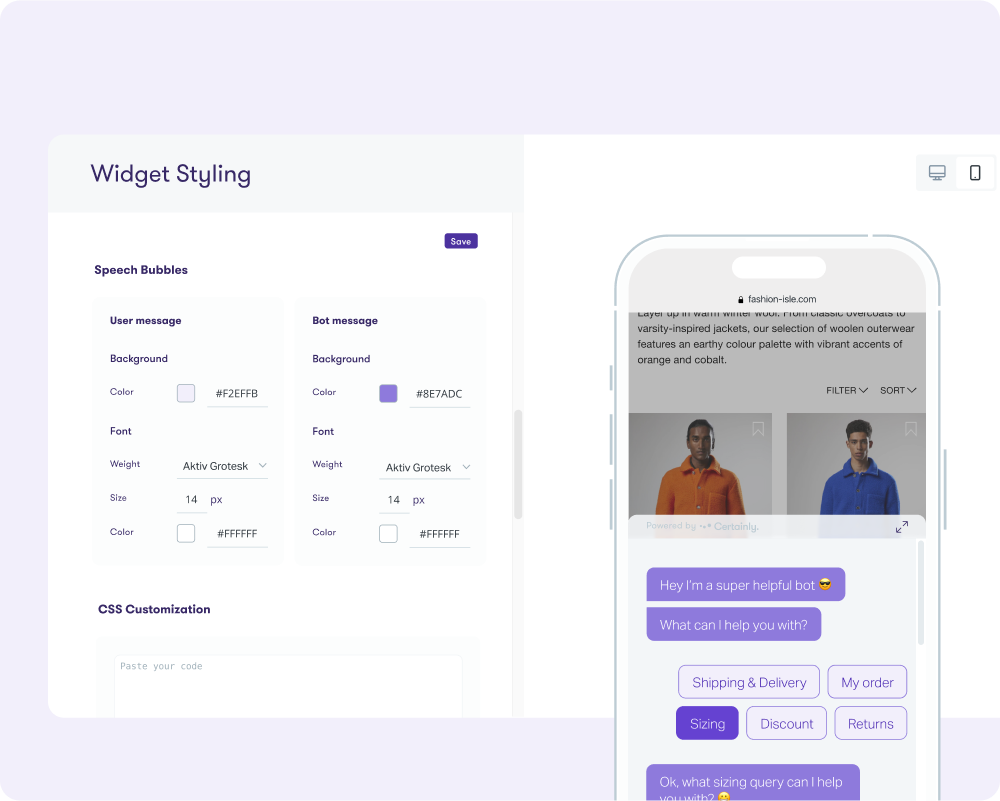
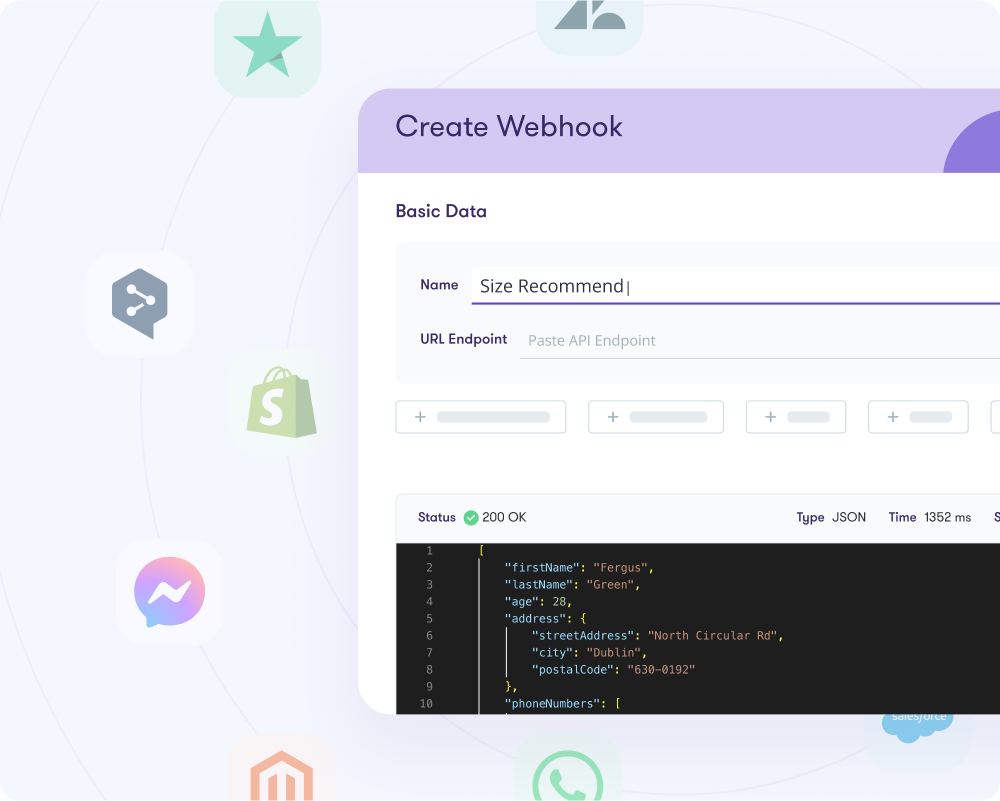
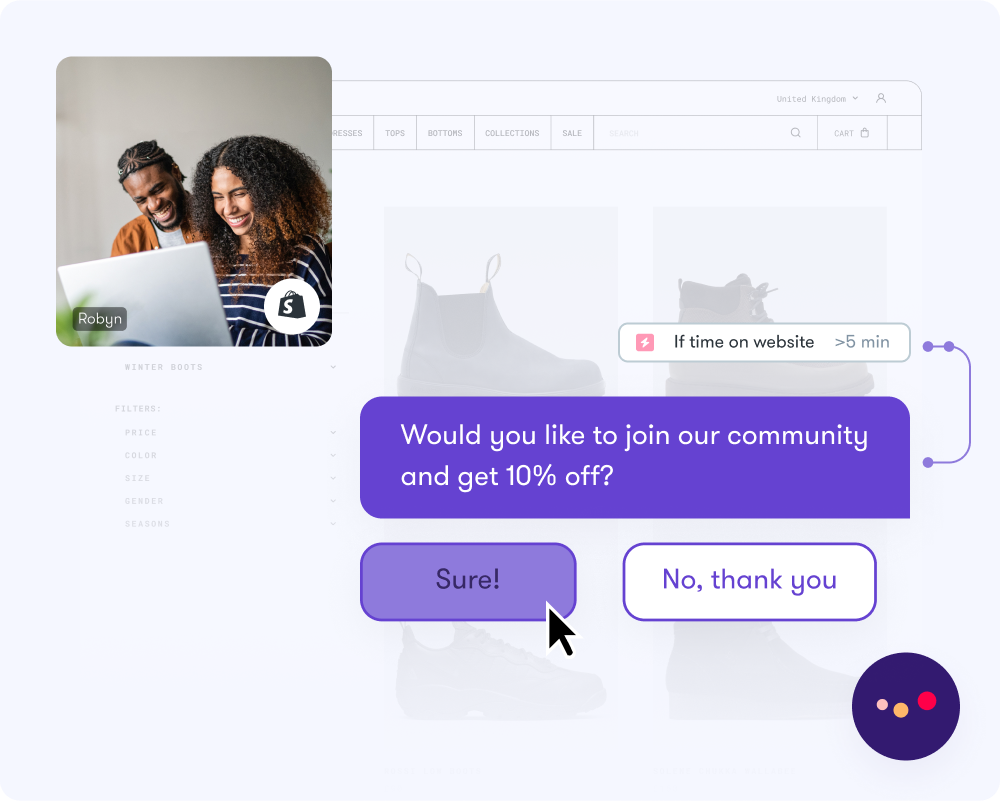
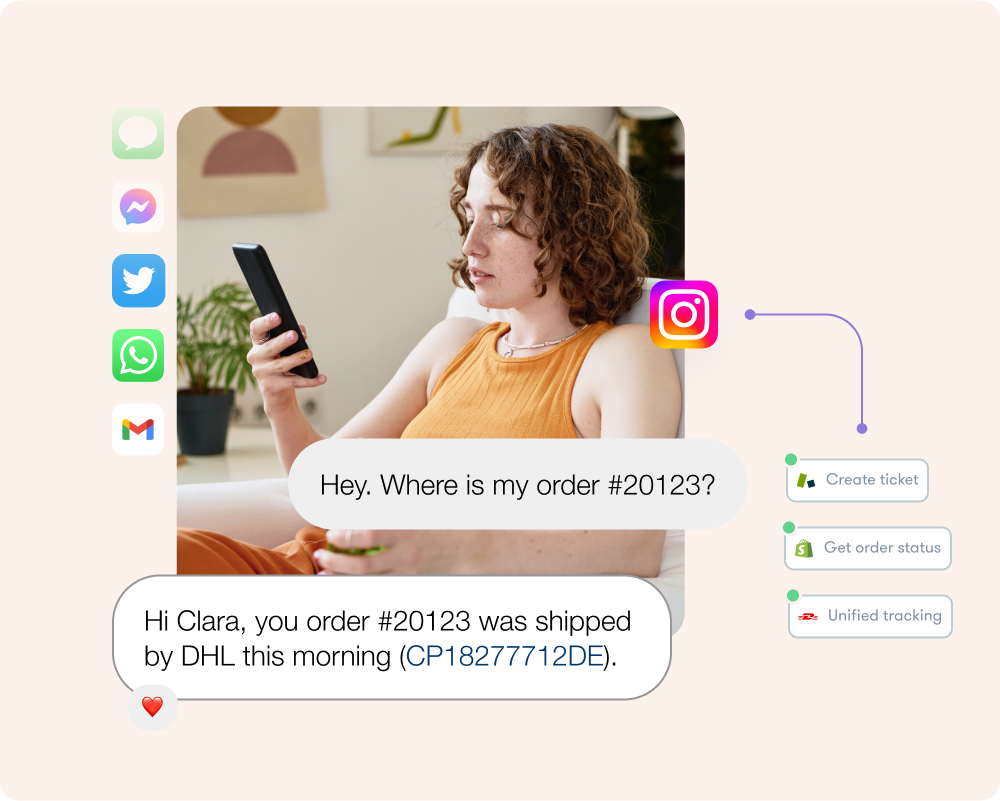
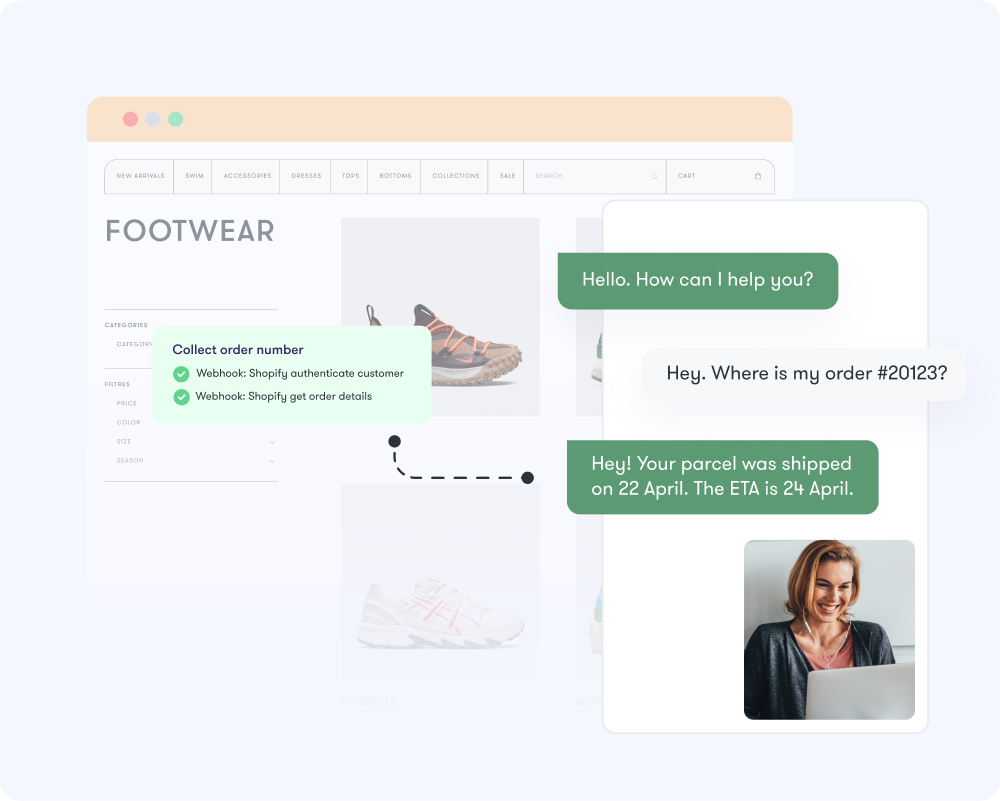
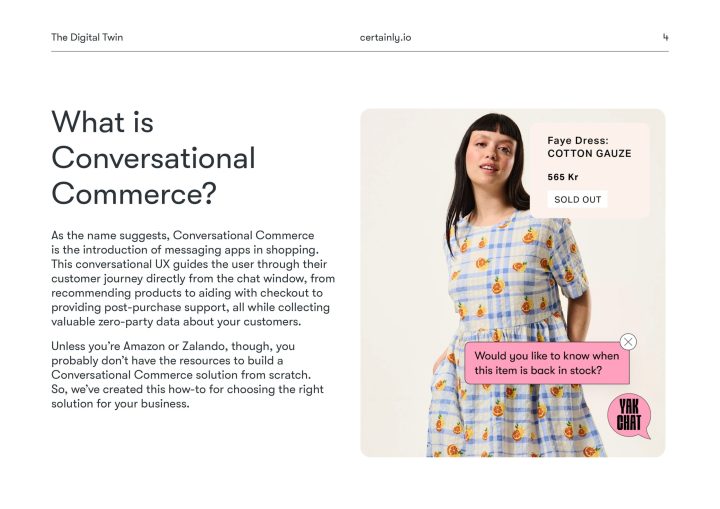
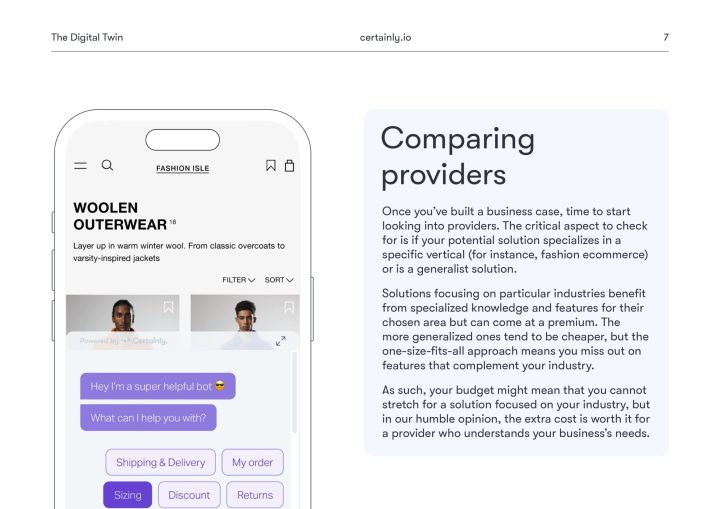
The first decision was to move away from illustration entirely for product-facing contexts and towards photography and real UI — actual people using the platform, actual screens showing what it does. This wasn’t just an aesthetic call. The illustration style had been actively preventing the product from being visible. Replacing it with imagery that showed real customers and real admin interfaces made it possible to run a paid ad, a landing page, and a sales presentation that all told the same story. The illustration work didn’t disappear — it stayed where it had always worked, in whitepapers and long-form content — but it stopped being the primary visual language of the brand.
The palette expansion followed from the same logic. More tonal range meant we could build visual hierarchy across formats without fighting the brand at every step. Campaigns could travel across paid search, social, and email — consistent enough to build recognition, differentiated enough to work in each context.
Campaign Work & the ChatGPT Launch
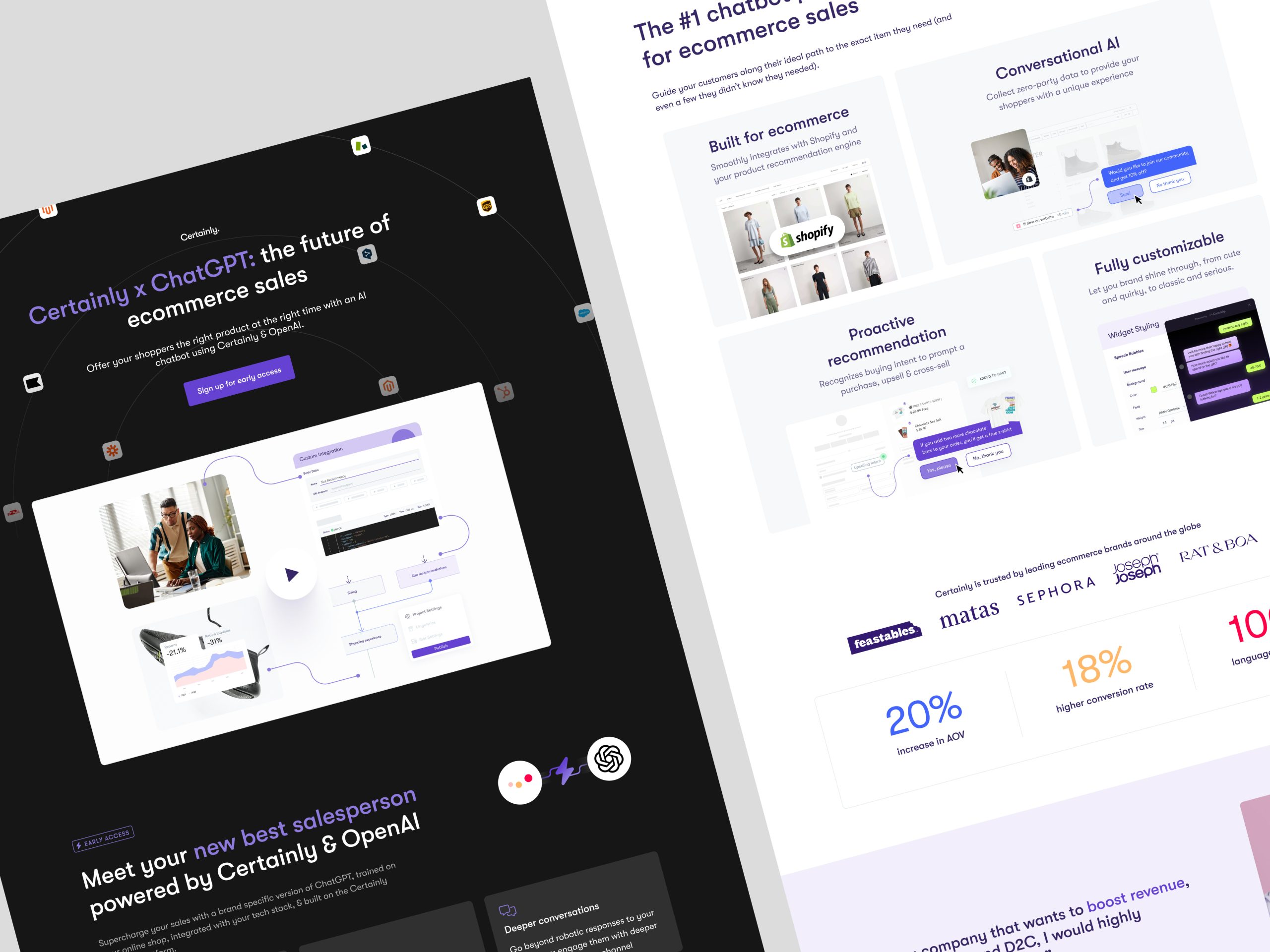
The Certainly x ChatGPT integration campaign was the highest-stakes creative challenge of the engagement. The capability was genuinely impressive — AI-powered chat layered on top of an ecommerce stack — but the audience we needed to reach were commercial buyers, not engineers. The risk of either over-explaining or under-explaining was real, and there wasn’t much room between the two.
The approach was to strip it back to the outcome: what does this actually change for a brand? The creative had to feel accessible without being simplified, and credible without leaning on technical detail. Assets were built to work across paid search, social, and organic — and within a single quarter, the campaign lifted pipeline generation by 323%. It was the highest pipeline quarter on record at the time.
Website & Navigation
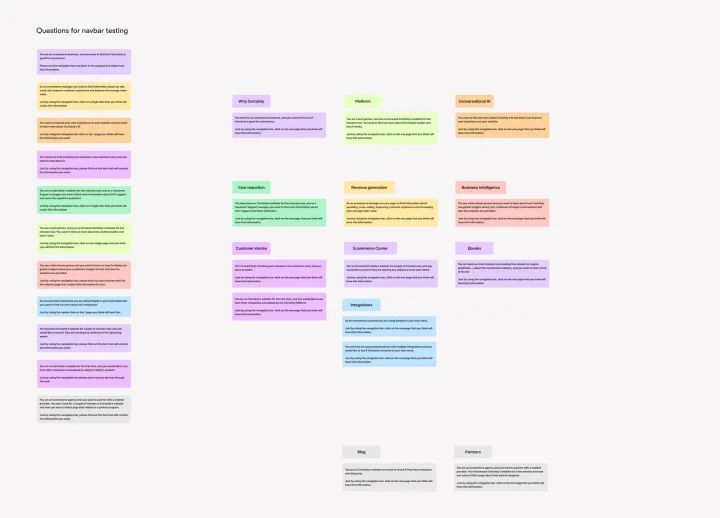
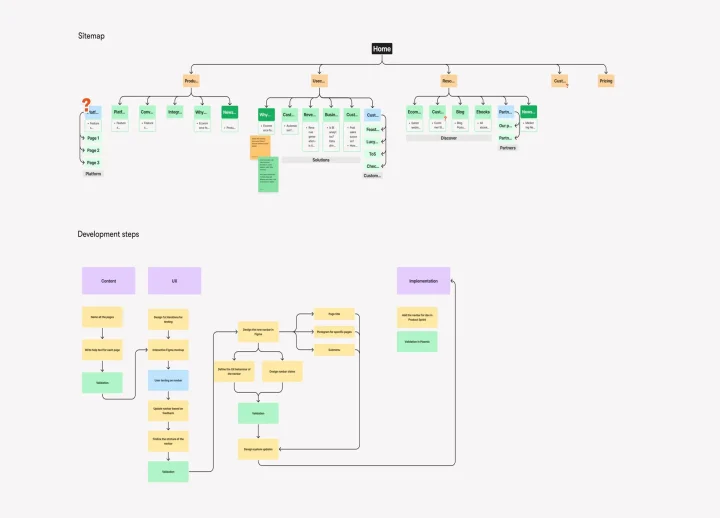
The website redesign started from the audiences, not the pages. We mapped the three entry points first — what each user type needed to understand, and in what order — and let those shape the structure. Wireframes went into user testing early and stayed there throughout. Post-launch, Hotjar analytics showed us where people dropped off and what messaging was actually landing, and we iterated from there.
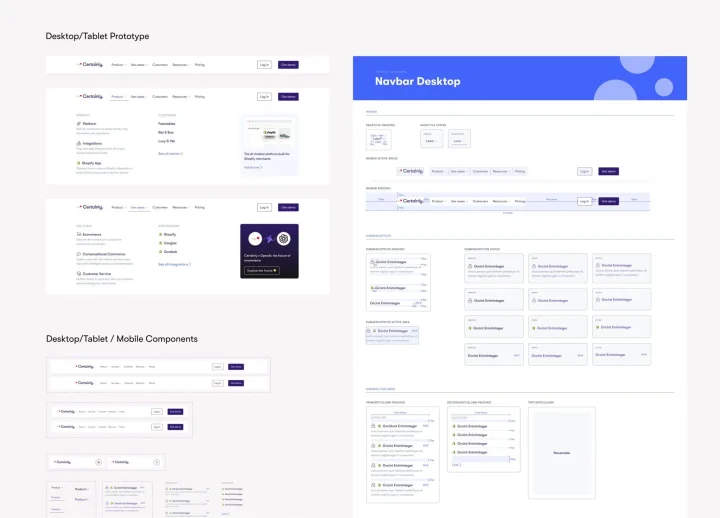
The navbar became its own contained design problem. It needed to serve all three audience types simultaneously without becoming the kind of mega-menu that signals complexity before anyone’s read a word. That took several rounds of information architecture work, responsive component design, and user testing before it held up consistently. The final version was simple enough to feel lightweight and structured enough to actually route people where they needed to go.
Chatbot UX
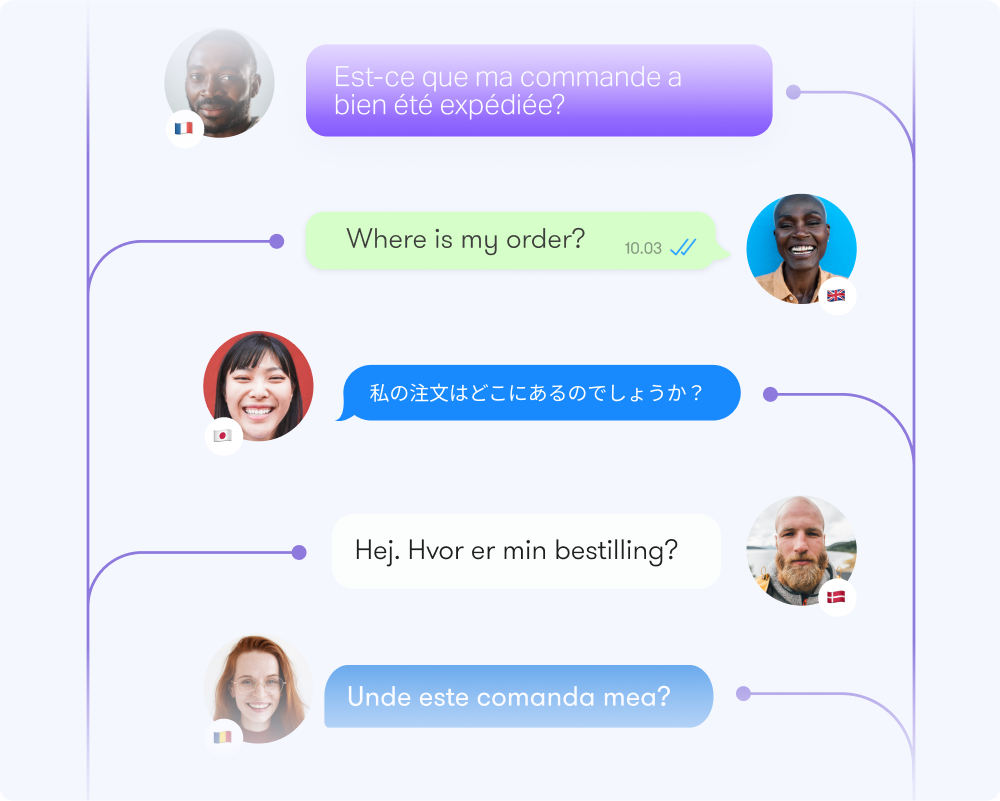
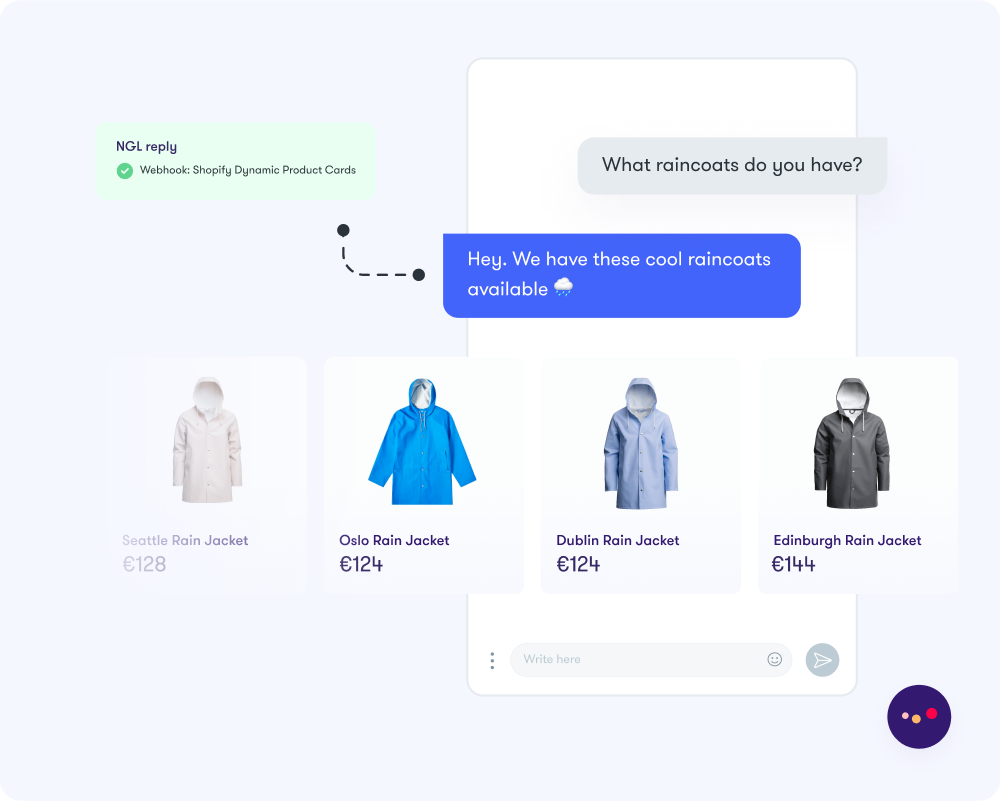
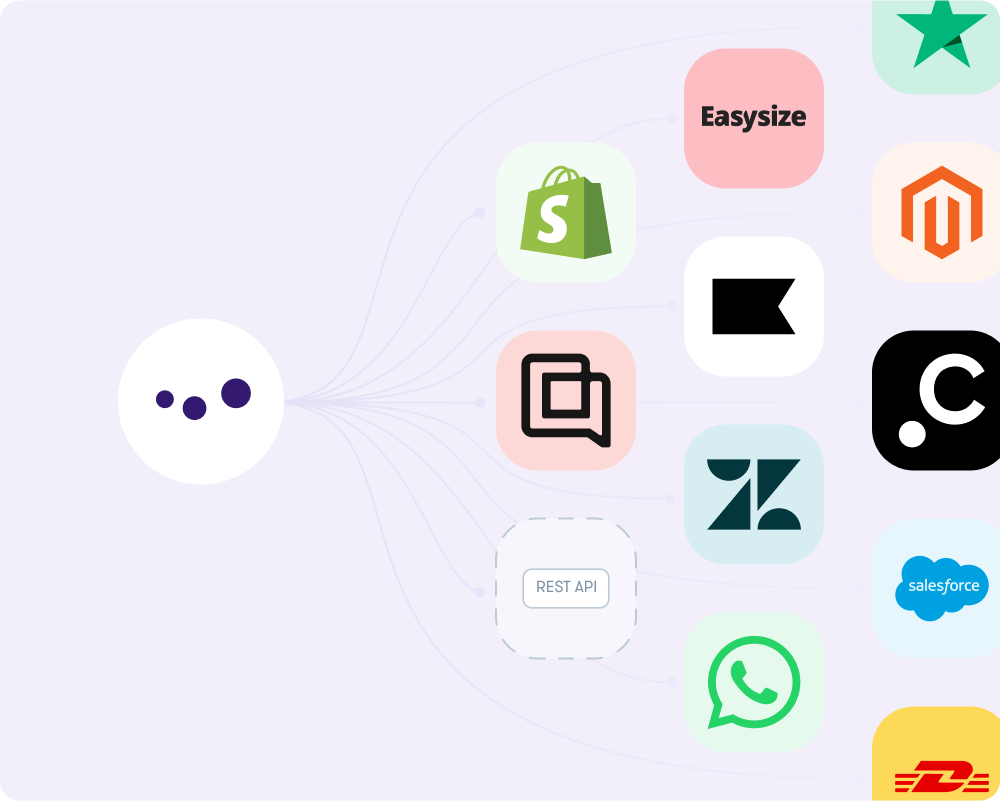
Alongside the brand and marketing work, I designed chatbot-driven flows across product discovery, customer support, checkout assistance, and third-party channel integrations including WhatsApp and Instagram. The underlying challenge across all of them was the same: how do you make an AI-assisted conversation feel genuinely useful rather than scripted? Each scenario had its own user goals and technical constraints, but the design work in every case came back to mapping the full conversation flow, designing for the complete range of UI states, and making sure the experience didn’t break down at the edges — when someone asked something unexpected, or the bot needed to hand off to a human.
Supporting Materials
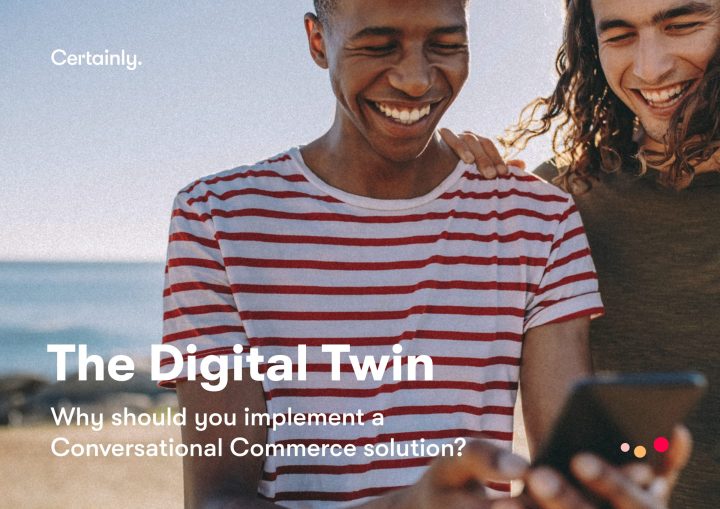
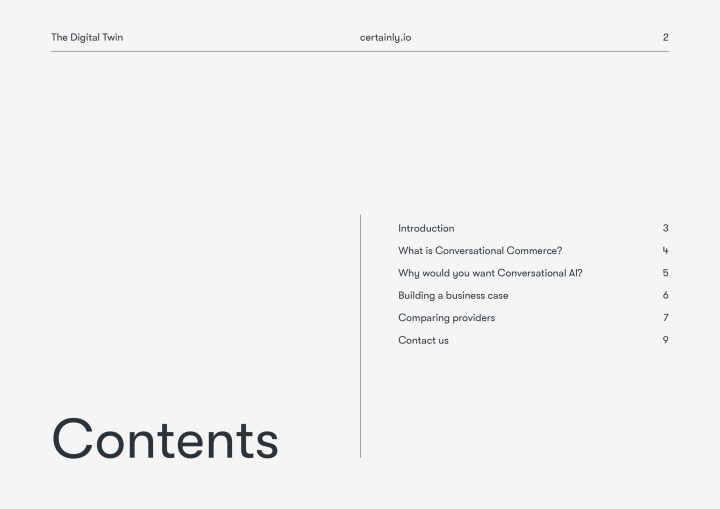
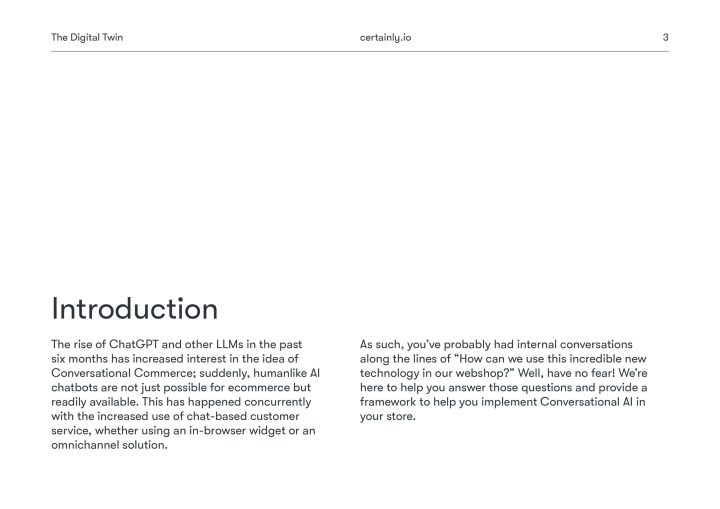
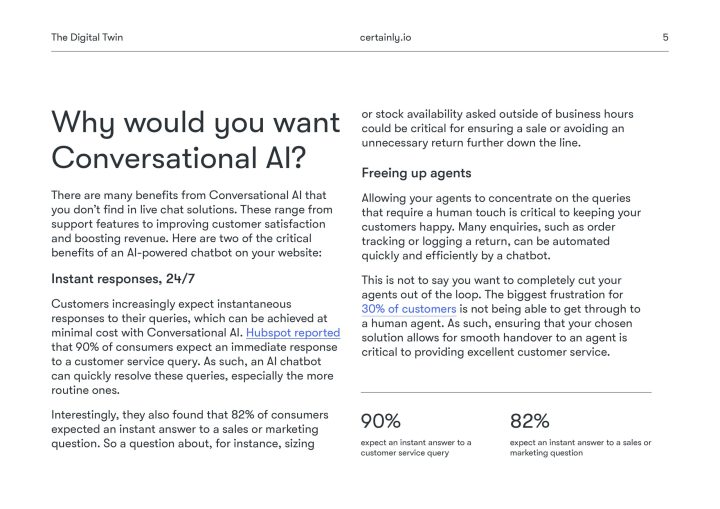
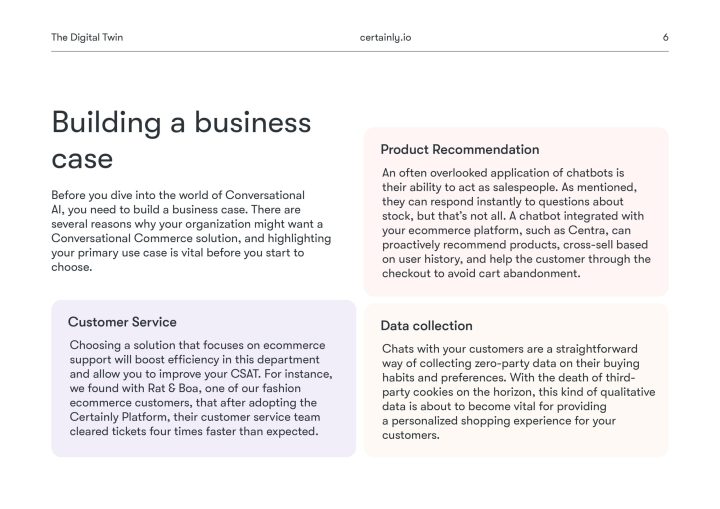
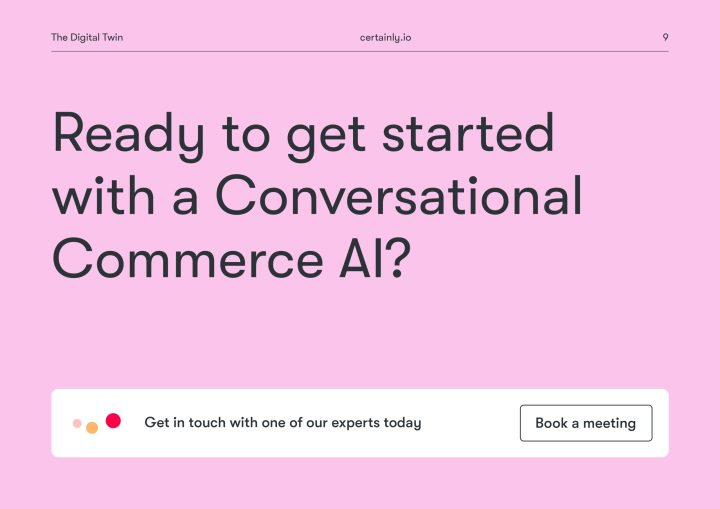
Beyond the core product and campaign work, I built out go-to-market assets to help the sales team carry the story into early conversations. That included a motion piece demonstrating chatbot-driven product recommendations inside a live shopping flow — used in demos and paid video — and whitepapers that explained Conversational Commerce in plain language, giving the team something credible to leave behind after discovery calls.

Outcome
The result was a brand system that could actually work at scale — coherent across product UI, marketing campaigns, and sales materials, with enough range to show up in real contexts. The ChatGPT campaign turned in 323% pipeline growth in a single quarter, the highest on record. Website conversion improved across all three audience segments. And the sales team finally had something clear and credible to take into early conversations — materials that explained Conversational Commerce in plain language and held together visually from first touch to close.